Where Does a Face Biometric Attendance Machine Work Best A Guide by Workplace
A face biometric attendance machine is easy to describe and harder to place. Where should it go, which workplaces gain the most from it, and what should you expect once it is running? Most articles stop at the features. This guide looks at the places where the machine is used, from factories and offices to schools and housing societies, and explains what automated attendance really gives you, where the technology is a poor fit, and how to choose a setup that suits your site. It is written for owners, HR teams and admin staff in India.
What a Face Biometric Attendance Machine Does
A face biometric attendance machine marks attendance by matching a person's face with a saved record. During enrolment, the machine takes photos of each person and stores a face template, a set of numbers that describes the face. At check-in, the camera captures the live face and compares it with the templates. If there is a match, the machine records the name, date and time, and the person walks on.
You may also see the more general term biometric attendance machine, which covers any device that identifies a person by a body trait. The most common traits are fingerprint, face, iris and palm. A face machine has one clear advantage over the others, which is that nothing is touched. Staff stand in front of the screen, look at it and go in, so there is no sensor to share and no card to lose.
Automated Attendance: What Gets Automated
The machine is only the first step. The value comes from automated attendance, which means the record is created, checked and totalled without anyone typing. The check-in time is saved the moment it happens. Your shift rules then apply on their own, so late arrivals, half days, weekly offs and holidays are marked correctly. Working hours are added up, overtime is calculated, and approved leave is matched with the days it covers.
Compare this with a paper register. Someone fills it, someone else adds up the days, and HR corrects the mistakes before payroll. With automated attendance, the totals are ready when the month ends, and a manager can see who is present or late at any time of the day. Attendi's attendance reports and leave management show how this looks in practice, with daily and monthly records for every employee in one place.
Where a Face Biometric Attendance Machine Works Best
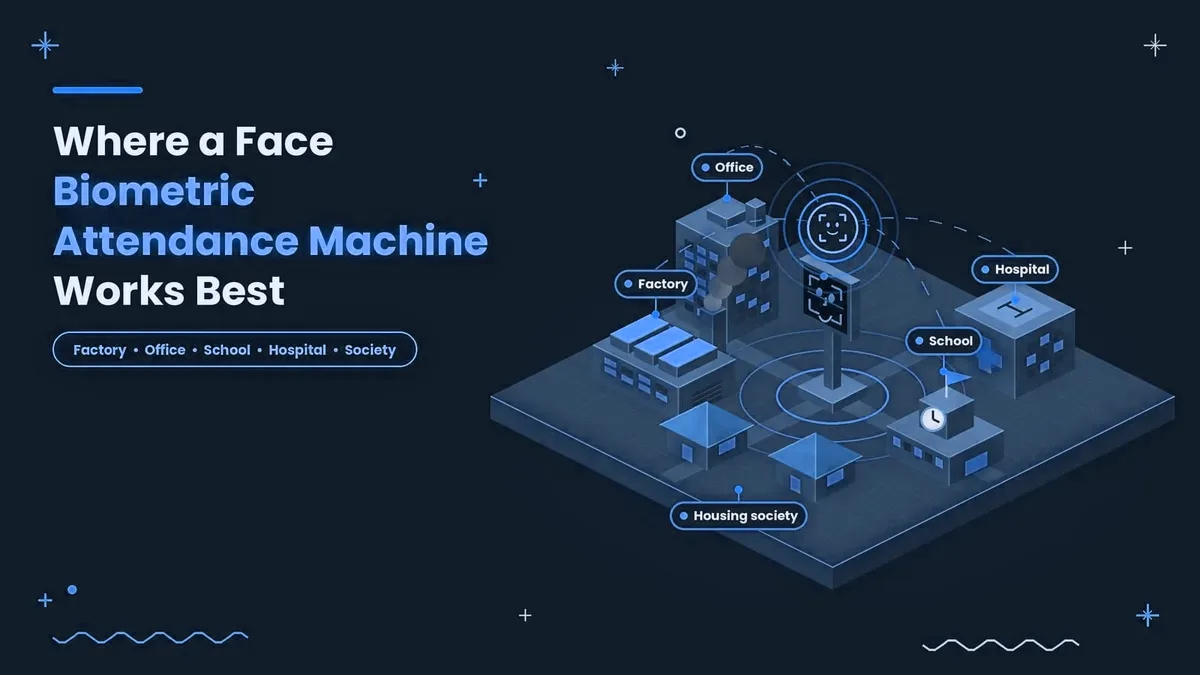
The table below lists common places where these machines are used, why they fit and what to watch.
Place | Why it fits | What to watch |
|---|---|---|
Factory or warehouse | Workers arrive in batches and their hands are often dirty | Dust on the lens and strong light at the gate |
Office with one entrance | Short list of staff and a fixed gate | A queue at shift start if one device serves many |
School or college | Staff arrive at one gate at fixed times | Consent and care with student data |
Hospital or clinic | Touch-free and hygienic across shifts | Night shifts and staff in masks or caps |
Housing society or facility team | A reliable record of guards and housekeeping staff | Outdoor light and a weak network |
Many small branches | Can work, but each site needs a device | An app is usually easier and cheaper to run |
Three of these deserve a closer look. In schools and colleges, a face machine at the staff entrance replaces the paper register and shows late arrivals to the principal in real time. For student attendance, schools should be more careful, since children's data needs consent from parents and stricter handling. In housing societies, the machine keeps a clean record of guards, housekeeping and maintenance staff, who often work in shifts and change often. A small WhatsApp helpline for missed punches is useful here, and a free WhatsApp QR code generator can create a code to stick next to the device so staff can message the admin at once.
In hospitals and clinics, hygiene is the main gain, because many people use one entrance across three shifts. Check how the device handles masks and caps, and test it at night, when the light is different.
Face Matching Beyond Attendance: Smart Voting Projects
The same idea of matching a live face with a stored record appears outside attendance. College students often build a smart voting system through face recognition as a project. The system checks the voter's face against a saved record before it allows a vote, and it blocks a second vote from the same face. These projects are a good way to see how face matching works, with enrolment, a stored template, a live match and a decision.
They also show why attendance is an easier place to use the technology. Real voting has strict legal, privacy and accuracy rules, and a wrong rejection there is a serious matter. In an office, staff know the machine is there, they have agreed to use it, and a failed match is fixed in seconds with a retry or a manual entry. The lessons carry over, though. Get consent, test accuracy with real people, and always keep a backup way to check in.
Choosing the Right Setup
Start by counting your entry points and the kinds of staff you have. A single gate with a crowd at fixed times suits a machine. Several branches, staff who work in the field and small teams suit app-based check-in, where employees use their phones with a face scan, a selfie or a code. Many businesses use both, with a machine at the main gate and the app for everyone else, and all the records flow into one system.
To compare machine types and what to look for in each, our guide to face recognition biometric devices explains the options. If you are leaning towards an app, read how a QR code attendance system works, because a QR code is a cheap and quick backup when a machine is offline or a face does not match.
Privacy and Consent
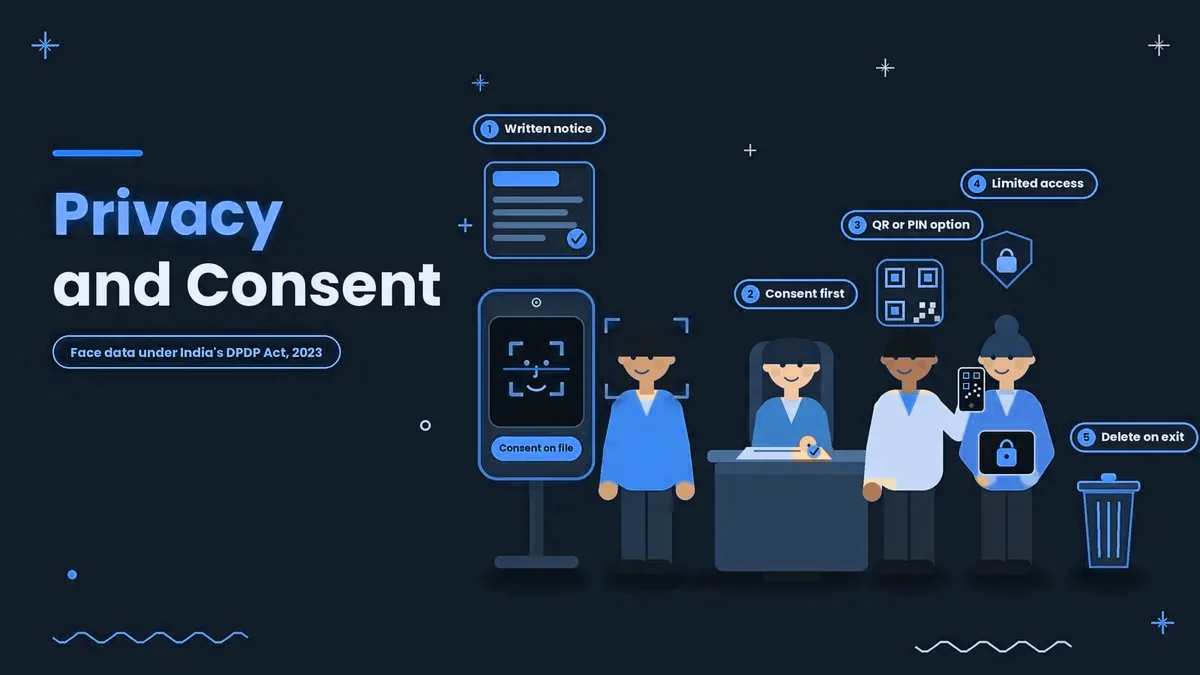
Face data is personal data, and India's Digital Personal Data Protection Act, 2023 applies to how employers and institutions handle it. Tell people in writing what you collect and why, take their consent before you enrol them, and offer a simple alternative, such as a QR check-in or a PIN, for anyone who does not want to enrol. Limit who can see the data, store it securely and delete it when the person leaves. This is general information and not legal advice, so check your policy with a legal adviser.
Automated Attendance with Attendi
If a machine does not suit your sites, Attendi gives you automated attendance through the app. Employees can check in with face capture, which is available on the Pro plan, and with QR attendance and selfie attendance on the higher plans. Field work attendance covers staff who work away from the office, and employee management keeps every record in one place. Custom settings let you define working hours, shifts, late rules, holidays and weekly offs, so that late marks and half days are applied by the system. Leave management links approved leave to attendance, so a leave day is never counted as an absence.
Attendi comes with a 15-day free trial when you sign up at attendi.in, so you can test face check-in at your own entrance with your own team before you decide on any hardware.
Final Thoughts
A face biometric attendance machine works best where many people use one gate, hands are often dirty and proxy attendance is a problem. It is a weaker choice for scattered teams and sites with poor light, power or network. Look at the place it will serve, plan for automated attendance from check-in to payroll, get consent, and keep a backup method ready. When those pieces are in place, the machine does what it is meant to do, which is to give you a record you can trust without extra work from anyone.