QR Code Attendance vs Biometric Attendance in India
QR code attendance is now one of the easiest ways to record when employees start and finish work. Instead of queuing at a fingerprint machine, an employee scans a code with a phone, and the time is saved in seconds. For many businesses this is enough. For others, employee biometric attendance still feels safer. The real question is which one fits your team, your budget and your rules on data.
This guide explains how QR attendance works, how a QR check in differs from fingerprint or face machines, where each method is strong and weak, and what to check under India's data protection law before you collect biometric data from staff.
What Is QR Code Attendance?
QR code attendance is a method where employees mark their presence by scanning a QR code with a smartphone. The code is printed or shown on a screen at the office gate, a shop counter, a site entrance or a classroom door. When an employee scans it through the attendance app, the system records the name, date, time and, if you want it, the location. Many people also call this QR attendance or QR check in, and all three names mean the same basic idea.
There are two kinds of codes. A static code stays the same and is usually printed once. A dynamic code changes after a short time, so an old photo of it stops working. Static codes are simpler to set up, and dynamic codes are harder to misuse. The right choice depends on how much control your workplace needs. If you want the full steps and the cost factors, read our guide on QR code attendance system setup and pricing.
How QR Check In Works Step by Step
A QR check in has very few steps, which is why staff learn it in a day. The employer creates a code for each office or site and places it where people enter. When an employee arrives, they open the attendance app and scan the code. The app confirms who the employee is from their login, adds the time, and can also check that the phone is near the workplace. The same scan at the end of the day records the check out.
From there the data moves on its own. Late marks, half days, weekly offs and holidays are applied by the rules you set, and the daily records become monthly totals that are ready for payroll. Nobody has to type from a register, and a manager can see who has arrived without calling anyone. For a team spread over several branches, this single view is often the biggest gain.
What Is Employee Biometric Attendance?
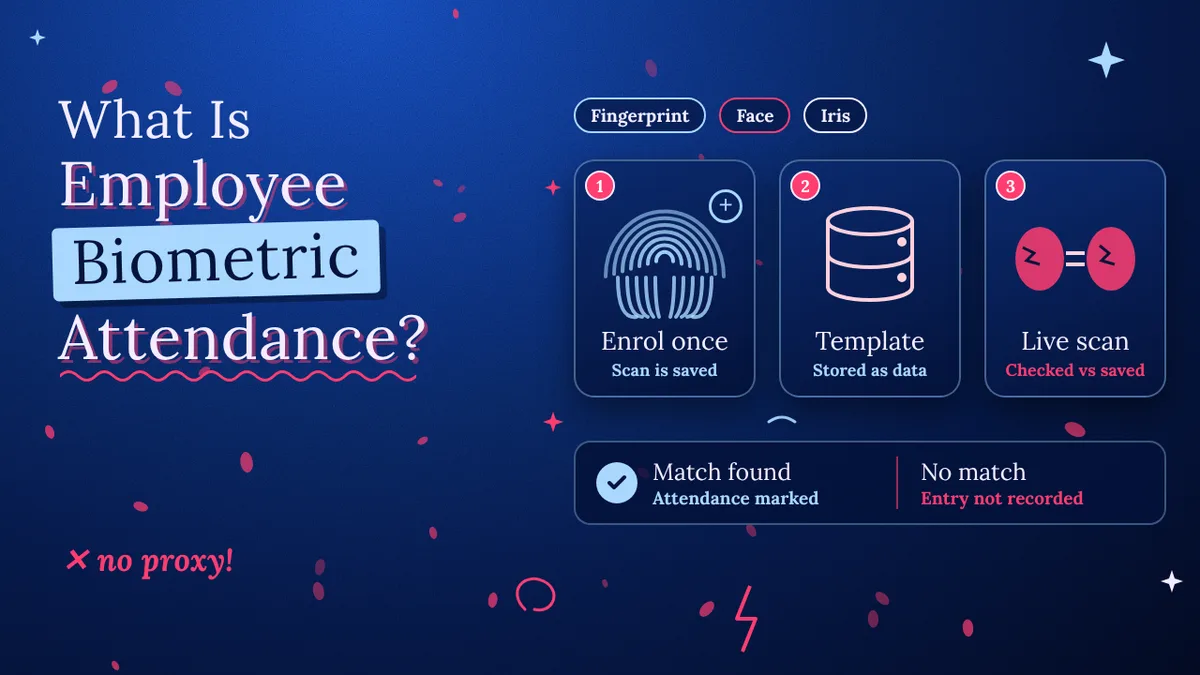
Employee biometric attendance uses a physical trait to confirm identity. The common types are fingerprint, face and iris. An employee enrols once, and the system stores a digital template of the trait. On every later check in, it compares the live scan with the stored template and marks attendance only on a match.
The strength of this method is that a person cannot easily lend their fingerprint or face to a friend, so proxy attendance falls sharply. The weaknesses are practical. Each entrance needs a device, devices need power, repair and updates, and queues form when many people arrive together. Fingerprint readers also struggle with worn or dirty fingers. Face systems cost more but are faster and touch free, and you can read about their price and buying points in our guide to face recognition attendance system cost.
QR Code Attendance vs Biometric Attendance
Both methods record time correctly when they are set up well. The difference is in cost, control and the amount of personal data involved. The table below puts the main points side by side.
Point | QR code attendance | Employee biometric attendance |
|---|---|---|
Hardware | Employee's own smartphone | Fingerprint, face or iris device at each entrance |
Setup cost | Low, a printed or on-screen code | Higher, devices plus installation |
Speed at the gate | Fast, a few seconds per scan | Fast for face, slower for fingerprint in a crowd |
Proxy attendance risk | Medium, reduced with dynamic codes, GPS and selfie | Low, because the body trait cannot be shared |
Multiple branches | Easy, one code per site | Needs a device for every site |
Remote and field staff | Works anywhere with a phone | Not practical outside the office |
Personal data collected | Name, time and location | Biometric template of each employee |
Maintenance | Almost none | Cleaning, repair and software updates |
In short, QR attendance wins on cost, flexibility and simplicity, while biometric attendance wins on certainty about who is checking in. Many businesses use QR for most of their staff and add a face check where proxy risk is high.
Where QR Code Attendance Works Best
QR attendance suits small and mid-sized offices that do not want to buy and maintain machines. It fits retail chains, clinics, coaching centres and schools, where each location needs a simple setup. It also works for construction and service teams that move between sites, because a code can be placed at each site and the app records which one the person scanned at.
People are already used to scanning. They do it for UPI payments and for chat links, and a shop owner may already keep a WhatsApp QR code on the billing counter. Because the habit exists, staff need almost no training, which is a quiet reason why QR check in is adopted so smoothly.
Limits of QR Attendance and How to Reduce Proxy Punching
The main weakness is proxy attendance. If an employee sends a photo of the code to a friend, the friend can scan from home. Three simple controls reduce this. First, use a dynamic code or a location check, so a scan from outside the workplace is rejected. Second, tie each scan to one logged-in employee and device, so a single phone cannot mark many people. Third, add a selfie or face capture at the time of the scan, which links the scan to a face on that day.
This is a practical middle path. You keep the low cost and flexibility of QR code attendance, and you add a biometric style check only where it is worth it. Attendi follows this pattern: QR attendance is available for check in, selfie attendance and face capture are available on the higher plans, and field work attendance covers staff who work away from the office.
Biometric Data and Privacy in India
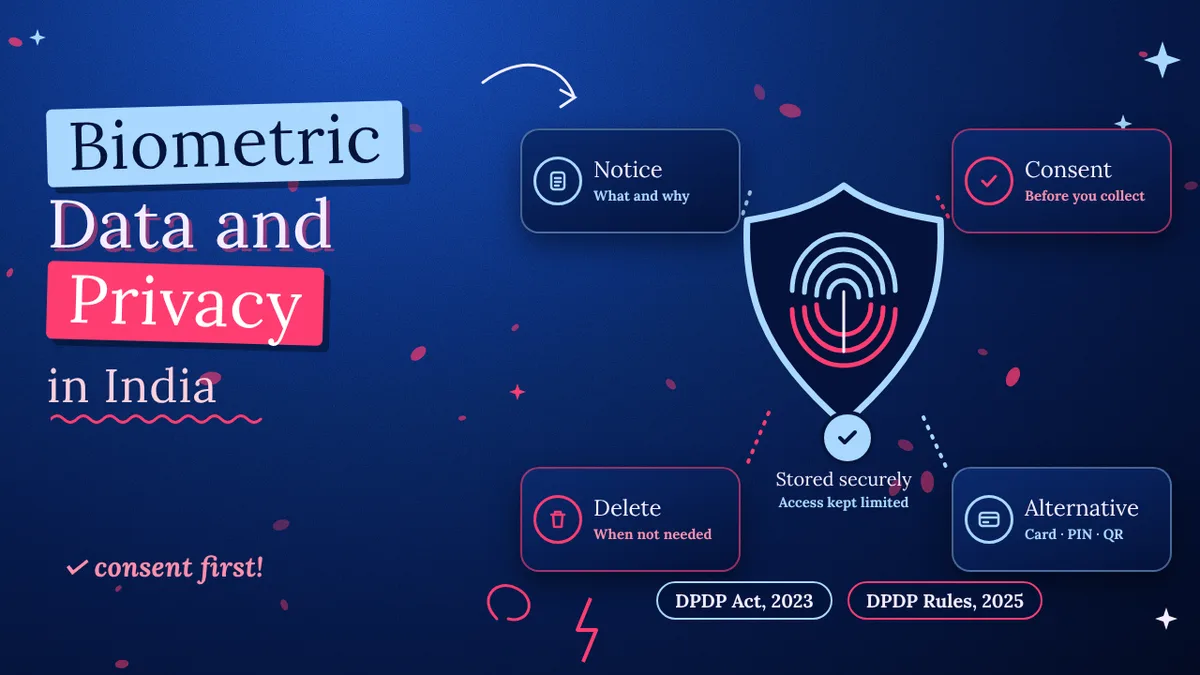
Biometric data is personal data, and India's Digital Personal Data Protection Act, 2023 and the DPDP Rules, 2025 apply to how employers handle it. The main employer duties under the Rules are being phased in, with most of them expected to apply from around May 2027, but it is better to build good habits now. Give employees a clear written notice of what you collect and why. Take their consent in a clear form before you collect biometric data. Offer an alternative, such as a card, a PIN or a QR check in, for people who do not want to enrol. Store the data securely, and delete it when it is no longer needed, for example after the employee leaves.
QR code attendance collects less personal data. It needs a name, a time and, if you choose, a location, and no body trait. That makes the privacy side simpler to manage. If you do choose biometric attendance, speak with a legal adviser to set up the notice, consent and retention steps correctly. This section is general information and not legal advice.
How to Choose the Right Method
Start with the problem you have. If your main problem is paper registers, late entries and slow month-end work, QR code attendance solves it at low cost. If your main problem is staff marking attendance for each other, add selfie or face capture, or place biometric machines at the main gate. If you have many sites or field staff, QR with location checks is the practical choice, because a machine cannot follow people around. If you have one large factory gate with hundreds of workers arriving at once, a face or fingerprint device may be faster.
Also count the full cost. A device-based system needs purchase, installation, repair and sometimes a person to manage it. A QR system needs a phone for each employee, and most already have one. Ask for a trial before you commit, and test the system with real staff at your busiest hour.
QR Code Attendance with Attendi
Attendi is built for this kind of choice. Employees check in through QR attendance, and the same app supports selfie attendance, face capture and field work attendance on the higher plans. Employee management keeps staff records in one place, and custom settings let you define shifts, working hours, late rules, holidays and weekly offs, so that late marks and half days are applied by the system and not by hand.
Every scan feeds into attendance reports and leave management in the same place, so a manager can see who is present, late, absent or on leave without opening three different tools. At month end the reports show total working hours for each person, ready for payroll. Attendi comes with a 15-day free trial when you sign up at attendi.in, so you can test QR check in with your own team before you pay.
Final Thoughts
QR code attendance is a low-cost, flexible way to record employee time, and it works well for most small and mid-sized teams. Employee biometric attendance gives stronger proof of identity, but it costs more, needs devices and brings extra data duties. A mix of QR check in with selfie or face capture checks gives many businesses the best balance. Pick the method that matches your real problem, write a clear attendance policy, tell your staff how their data is used, and review the reports every month.