Importance of Employee Relationship Management
The importance of employee relationship management shows up long before an employee resigns. It shows up in the first week, when a new joiner decides whether they made the right choice. It shows up in how a manager reacts to a mistake, how a leave request is handled, and whether salary arrives on the promised date. Employee relationship management is the planned effort to build and protect trust between a business and its people at every stage of their journey. In this guide, you will learn why it matters, how it works across the employee lifecycle, and how fair attendance, leave and pay records make the whole effort easier to run.
What Is Employee Relationship Management?
Employee relationship management is the way an organization builds, maintains and repairs its relationship with each employee. It is not a single policy or a yearly survey. It is a set of daily habits: how you communicate, how you treat people, how you settle problems and how you recognize effort.
There are three relationships inside every workplace:
Employee and manager: the most important one, because managers shape the daily experience.
Employee and organization: how people feel about the company's fairness, values and future.
Employee and colleagues: the level of cooperation and respect within the team.
Strong employee relationship management looks after all three. If one breaks, the others usually suffer.
Why the Importance of Employee Relationship Management Keeps Growing
Work has changed. People talk about their employers online, change jobs faster and expect to be heard. Many teams now work across shifts, sites and remote setups, so a manager cannot rely on casual chats by the desk to keep trust alive. A planned approach has become necessary, even for a team of ten.
The cost of getting it wrong is also clear. Replacing an employee means advertising, interviewing, onboarding and a long period before the new person is fully productive. A single unresolved complaint can spread through a team and lower the morale of people who were never involved.
The Importance of Employee Relationship Management: Seven Clear Gains
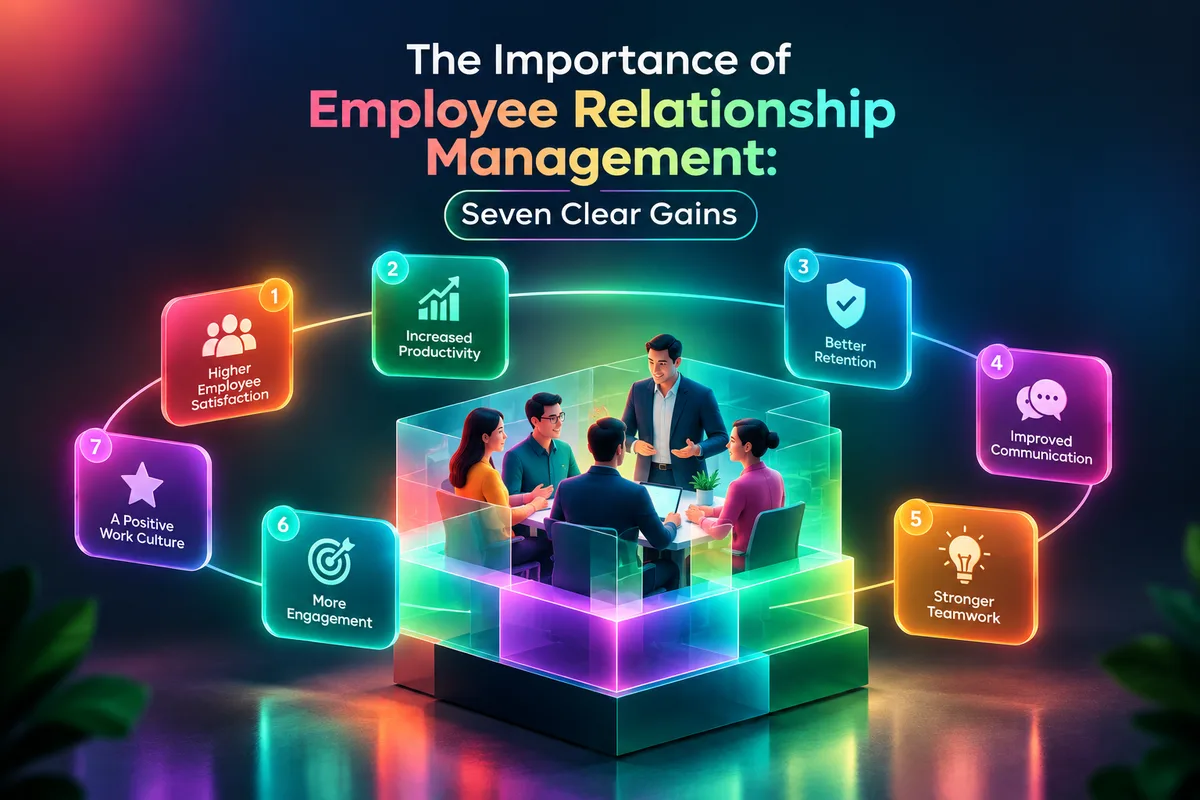
1. Higher retention. People stay where they feel valued and fairly treated. A good relationship with the direct manager is one of the strongest reasons employees give for staying.
2. Better performance. When people trust their manager, they ask questions early, admit mistakes sooner and take more ownership. Teams waste less time on politics and guesswork.
3. Early warning of problems. Employees tell a trusted manager about stress, safety concerns or conflicts before they grow. Without trust, the same information arrives only in an exit interview.
4. Fewer disputes. Small disagreements get settled in conversation instead of turning into formal complaints. This protects both the employee and the business.
5. A healthier culture. Fairness and respect become normal. New joiners copy what they see, so good habits spread.
6. Stronger employer reputation. People who have good experiences recommend their workplace, which makes hiring easier and cheaper.
7. Smoother change. When a company needs to change shifts, policies or roles, employees who trust their leaders cooperate more easily, even when the news is not welcome.
How Fair Attendance, Leave and Pay Build Trust
Most people do not judge an employer by its mission statement. They judge it by three practical things: whether their working hours are recorded correctly, whether their leave is approved on clear rules, and whether their salary is right and on time. When any of these goes wrong, trust drops quickly, and it takes months to rebuild.
Take attendance first. A missed punch, a wrongly marked late arrival or a half-day that was never counted can turn into a heated argument at month end. If attendance lives in a paper register or a shared sheet that only one person edits, employees often feel that the record is not in their hands. A clear digital record, visible to both the employee and the manager, removes most of this friction. You can see how Attendi handles attendance tracking, leave and related workforce records on the Attendi features page.
Leave works the same way. When leave balances are unclear or approvals depend on who the manager likes, employees notice. A simple flow where the request is raised, reviewed and answered with a visible balance keeps the process fair. Salary then follows from these records. If attendance and leave are accurate, the pay calculation has fewer errors, fewer corrections and fewer awkward conversations.
The point is simple: fair systems protect relationships. A manager who does not have to argue about whose record is right has more time to talk about work, growth and support.
Employee Relationship Management Across the Employee Lifecycle
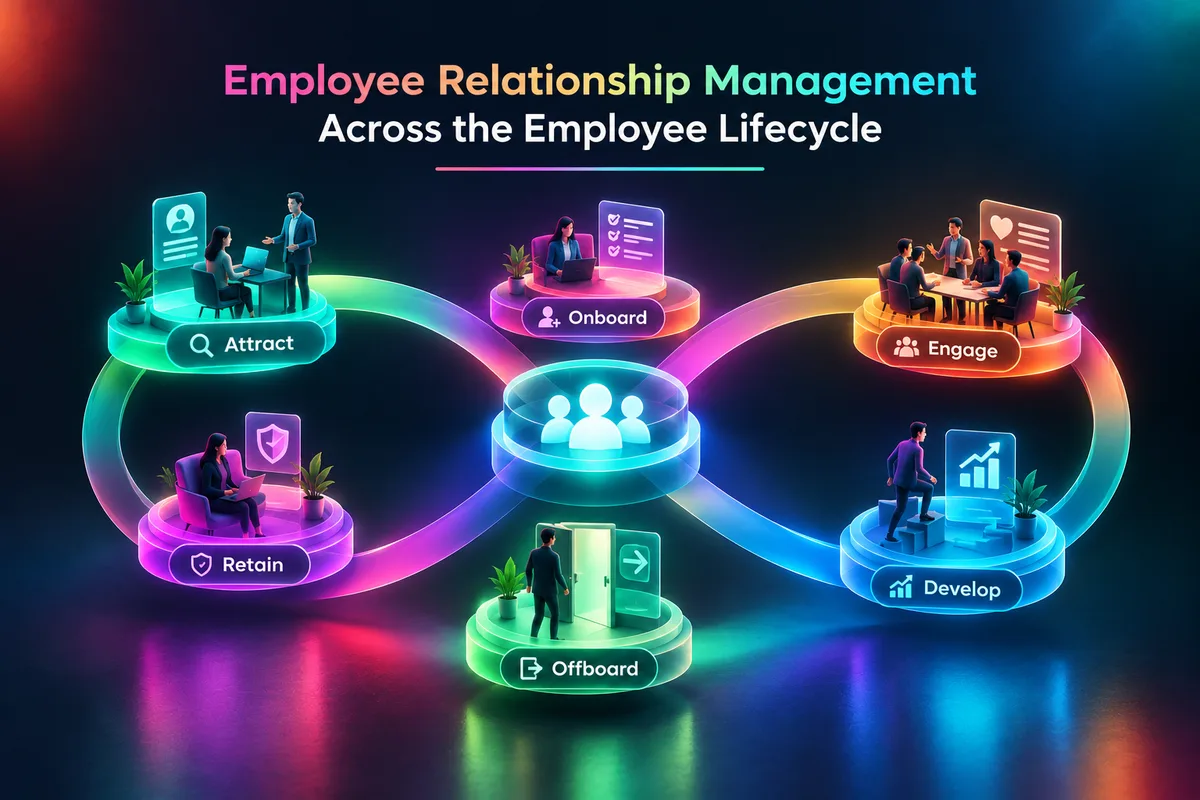
A useful way to plan is to think in stages. Each stage has its own chance to build or damage trust. The table below shows what to aim for at each point.
Stage | Relationship goal | Practical action | Risk if ignored |
|---|---|---|---|
Hiring | Honest first impression | Share clear role, pay and expectations | Early regret and quick exits |
Onboarding | Feeling welcome and prepared | Ready documents, a buddy and a first-week plan | Confusion and low confidence |
First 90 days | Early trust in the manager | Weekly check-ins and clear goals | Silent disengagement |
Daily work | Fairness and respect | Equal attendance and leave rules, timely feedback, fair workload | Resentment and conflict |
Growth | Seeing a future | Training, promotion criteria and honest career talks | Best people leave for growth |
Conflict or complaint | Being heard and treated fairly | One clear channel, a named owner and a deadline | Loss of trust and disputes |
Exit | Leaving on good terms | Respectful handover, exit conversation and timely settlement | Bad reviews and lost goodwill |
Hiring and Onboarding
Trust starts with honesty. If the job description promises something the role does not offer, the relationship begins with a small betrayal. Be clear about duties, working hours, pay structure and growth. During onboarding, make sure the desk, documents, system access and a friendly colleague are ready on day one. Setting up the new joiner's attendance and leave profile in advance is a small step that tells the person the company respects their time. If you want to understand how a tool like this is set up for a new team, the Attendi how it works page explains the process step by step.
The First Ninety Days
This period decides a lot. Hold short weekly check-ins, set clear goals for the first month and ask what is going well and what is confusing. Many early exits can be avoided with a few honest conversations.
Daily Work
Most of the relationship is built here, in small moments. Apply attendance, leave and overtime rules equally. Give feedback soon after an event, not months later. Share workload fairly and say thank you when it is deserved.
Growth and Development
People want to know where they are heading. Explain how promotions and raises are decided, offer training and talk about career paths once or twice a year. Silence about the future pushes ambitious employees to look elsewhere.
Handling Conflict
Every workplace has conflict. What matters is whether it is handled early and fairly. Listen to both sides, keep notes, avoid taking sides before the facts are clear and tell the people involved what the outcome is.
Exit
How you treat someone who is leaving is watched by those who stay. Handle the notice period, handover, final settlement and experience letter on time and respectfully. A good exit often leads to referrals and even future returns.
Building Better Manager and Employee Relationships
The direct manager is the face of the company for most employees. A few habits make a big difference:
Hold regular one-to-one meetings, even short ones, and keep them focused on the employee.
Ask, then listen. A question such as "What is slowing you down?" brings out real problems.
Give specific feedback. "Your report was clear and on time" is better than "good job".
Keep promises. If you say you will check something, do it and report back.
Be consistent. Employees notice when rules change depending on the person.
Managers need training for this. Many were promoted for technical skills and never taught how to handle people.
Open Communication Channels That Employees Actually Use
Trust grows when people have easy ways to speak and be answered. A mix of channels works best: team meetings, one-to-ones, anonymous surveys, a suggestion box and a simple helpdesk for complaints. Whatever channel you use, the rule stays the same: every message needs an owner and a reply time. A complaint that sits unanswered for two weeks does more damage than the original problem.
A written record also helps. When a question about a missed punch, a leave balance or a pay difference is raised, the employee should be able to see what was recorded and when. This turns a possible argument into a quick check.
Employee Relationship Management for Frontline and Support Staff
Office employees often get the most attention, while guards, cleaners, drivers, helpers and maintenance workers are left out. They deal with customers or residents all day, and their mood shows up in service quality. Clear duties, fair pay on time, respectful treatment and a way to raise problems are just as important for them as for managers.
Housing societies are a good example. A society depends on guards, housekeeping, gardeners and technicians, yet the relationship is often run through phone calls and chat groups. Duties are unclear, complaints are lost and disputes about attendance or payment drag on. Platforms such as Socnivo bring staff, visitor and complaint handling into one place for communities, which shows how a visible process replaces memory and guesswork. The idea applies to any workplace: people trust a process they can see and track.
Confidentiality and Data Trust
Employees share sensitive things with their employers, such as health issues, family problems and complaints about colleagues. If they fear that information will spread, they stop speaking up. Limit who can see complaint records, keep notes factual and never discuss one person's case with others.
The same care applies to the software you use. Attendance, leave and salary records are personal data. Before choosing any tool, check how it stores and protects that data. You can read how Attendi treats this subject in the Attendi privacy policy. For legal duties on employee data and workplace rules, speak with a qualified professional, because the requirements depend on your size, industry and state.
How to Measure Relationship Health
You do not need complicated analytics. A few simple signs tell you a lot:
Turnover in the first year, which shows how well hiring and onboarding work.
Reasons for leaving, collected in an honest exit conversation.
Complaint volume and closing time, because fast closure shows that people trust the process.
Absenteeism and late arrivals, which often rise when morale falls.
Disputes about attendance, leave or pay, since a falling number means your records are being trusted.
Pulse survey results, using three or four questions about trust, fairness and manager support.
Track the direction over several months. One bad month is a signal, but a steady slide is a warning.
Common Mistakes to Avoid
Treating it as an HR-only job. HR can set up the system, but managers carry it out every day.
Collecting feedback and doing nothing. If people see no change, they stop giving feedback.
Letting favorites bend the rules. Unequal treatment destroys trust faster than almost anything else.
Waiting for a crisis. Small regular steps cost less than emergency repairs.
Ignoring frontline staff. Every employee, including support and contract staff, deserves a fair process.
Keeping no records. Without dates and notes, even a fair decision is hard to explain later.
Frequently Asked Questions
What is the importance of employee relationship management? It builds trust between employer and employees, which improves retention, performance and communication, protects the reputation of the business and reduces conflict and disputes.
What is the difference between employee relations and employee relationship management? The terms overlap. Employee relations often refers to handling issues such as complaints and discipline. Employee relationship management is wider and covers the whole journey, from hiring to exit, with the focus on trust.
Who is responsible for employee relationship management? HR designs the policies and processes, but managers and leaders carry them out daily. Leadership sets the tone through its own behavior.
How can a small business start? Begin with regular one-to-one conversations, one clear way to raise complaints and written rules for leave and attendance. Add surveys and recognition as you grow.
How do attendance and leave records affect employee relationships? Accurate, visible records prevent most month-end arguments. When employees can see their own attendance and leave balance, they trust the pay that follows from it.
Can technology help build better relationships? Yes. Tools make records, notices and requests easier to track. They work best when a person is responsible for acting on what comes in.
Does employee relationship management apply to non-office workplaces? Yes. Shops, factories, clinics, schools and housing societies all depend on people, and the same principles of fairness, communication and quick resolution apply.
Final Thoughts
The importance of employee relationship management comes down to a simple truth: people give their best to places where they feel respected, informed and fairly treated. That feeling is built in small moments across the whole journey, from the first interview to the last day, and fair attendance, leave and pay records sit at the center of it.
Start with the stage that hurts most right now. It may be onboarding, manager conversations or complaint handling. Fix that first, measure the change over a few months and then move to the next stage. Steady, honest effort builds the kind of trust that no policy document can create alone.