Employee Management System 2026 Transforming the Way Businesses Manage Teams
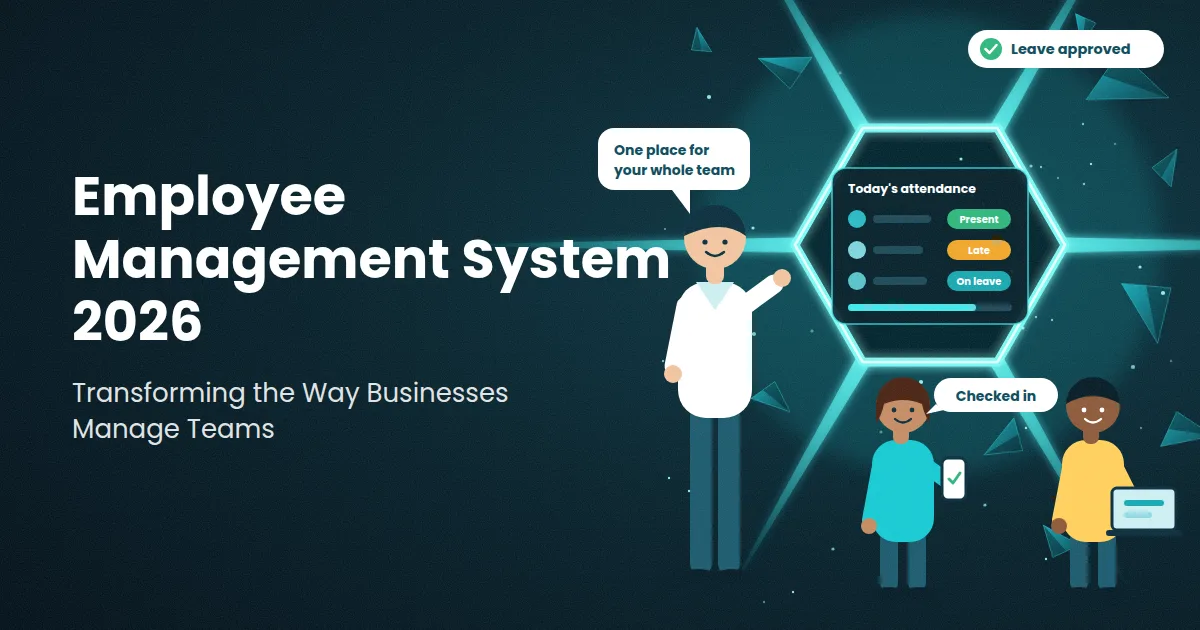
Employee management system 2026 is a very different thing from the register-and-spreadsheet setup that many businesses still run on. Teams now work in shifts, at client sites, from home and across branches, and owners are expected to keep fair, accurate records for all of them. A modern employee management system brings attendance, leave, records and approvals into one online platform, so managers can see what is happening and act on it the same day. This guide explains what an employee management system looks like in 2026, how it changes the way businesses manage teams, which trends matter, and how to start without disrupting your work.
What Is an Employee Management System in 2026?
An employee management system is software that stores employee records and manages daily work tasks such as attendance, working hours, leave and, in many tools, payroll data. In 2026, almost all good systems are cloud-based, which means your team logs in through a browser or a mobile app, and the provider handles hosting, backups and updates.
You will also see the same idea called employee management software, HRMS or HRIS. The names overlap, so judge a tool by what it does for your team, not by its label. A small shop may only need attendance and leave. A growing company may also want reports, approvals and payroll support.
Why Businesses Are Rethinking Team Management
Four changes explain why more businesses are moving to an online system this year.
Work is spread out. Shift workers, field staff, remote employees and branch teams cannot be managed from one register.
Employees expect self-service. People want to check their own attendance and leave balance on a phone instead of asking HR.
Owners want faster answers. Waiting until month end to learn who was absent or late is too slow.
Data care matters more. Attendance patterns, phone numbers and documents are personal data, and businesses are expected to handle them responsibly.
Old Methods vs an Employee Management System in 2026
The table below shows how the daily work of managing a team changes when you move from manual tracking to an online system.
Area | Older method (register, sheet, chat) | Employee management system in 2026 |
|---|---|---|
Attendance | Signature in a register or a message to the manager | Check-in on a phone or browser, recorded with time |
Leave | Verbal request, paper form or message | Request raised online, approved by the manager, balance updated |
Team visibility | Phone calls to find out who is in | Live view of present, late and absent staff |
Month-end work | Manual counting and rechecking | Totals built from daily records |
Corrections | Hard to trace who changed what | Correction request with a visible history |
Employee questions | Ask HR or the owner | Self-service view of own records |
Record safety | One register or one computer | Cloud storage with backups and role-based access |
The biggest gain is not speed alone. Everyone looks at the same record, which removes most of the arguments about late marks, leave and hours.
Seven Ways an Employee Management System Transforms Team Management
1. Mobile-First Attendance
Staff mark attendance from a phone, and the system records it with the time. Teams that work outside the office no longer need a separate process, and managers stop chasing messages.
2. Rules Applied the Same Way for Everyone
You set working hours, grace time, week offs, holidays and leave types once. The system applies them to every employee. When someone asks why a late mark was counted, the answer is a rule, not a manager's opinion.
3. Faster Leave Approvals
Leave requests reach the manager online, along with the employee's balance. Approvals take minutes, and nobody has to search old messages to check how many days are left.
4. Real-Time Visibility
You can see who is present, late or on leave right now. If two people from the same team are absent, you know early and can cover the gap before the day gets busy.
5. Cleaner Data for Payroll
When attendance and leave are already recorded correctly, salary calculation starts from verified data. This lowers the chance of payment errors and the awkward conversations that follow them.
6. Reports That Show Patterns
Reports on absence, late marks and overtime show patterns that are hard to see in a sheet. A rise in late arrivals on Mondays, for example, may point to a schedule problem that is easy to fix.
7. More Trust From Employees
When employees can see their own records, they stop wondering whether the data is right. Open records reduce suspicion and improve the relationship between staff and management.
To see how attendance, leave and employee records come together in one tool, you can look at the Attendi features page.
Trends Shaping Employee Management in 2026
These are the directions in which employee management tools are moving. Not every business needs all of them, but they help you judge what to look for.
Automation of Routine Work
Approval flows, reminders and month-end totals are increasingly automatic. The goal is to remove repeated manual steps so that managers spend their time on decisions.
Smarter Reporting
Tools are getting better at pointing out unusual patterns, such as repeated late marks or frequent short leave, instead of only listing raw data. A person still has to decide what to do, but the signal arrives sooner.
Easier Connections With Other Systems
Businesses want attendance data to flow into payroll, accounting or their own software. Some have unusual needs, such as special shift rules or links with their own billing system. In such cases, a development partner such as Nexify, which offers custom software development and business automation, is the kind of team to speak with. Before going custom, write down exactly what your ready-made tool cannot do.
Employee Experience
Self-service, quick approvals and clear records are now part of how employees judge their employer. A system that is easy to use on a phone is more likely to be used properly.
Privacy by Design
Because employee data is personal, businesses are paying more attention to who can see what, how long data is kept and how it is protected.
Features to Look For in 2026
A long feature list can hide the few things you actually need. Start with this shortlist:
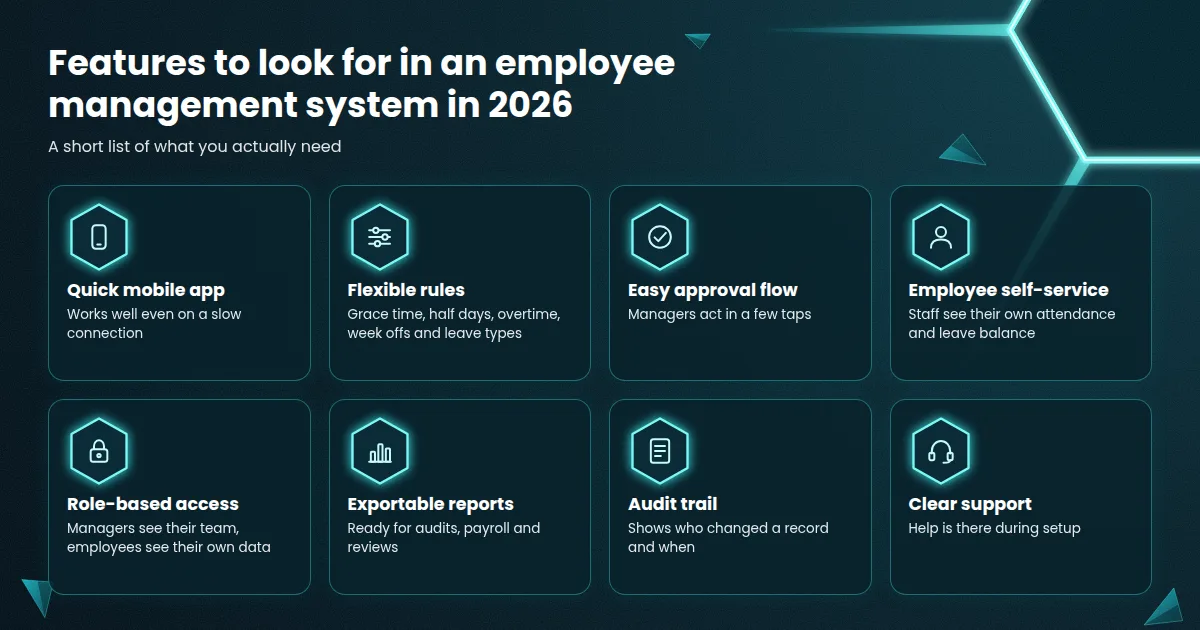
Mobile app that is quick and works on a slow connection.
Flexible rules for grace time, half days, overtime, week offs and your own leave types.
Approval flow that lets managers act in a few taps.
Employee self-service for attendance and leave balance.
Role-based access so a manager sees only their team and an employee sees only their own data.
Reports you can export for audits, payroll and reviews.
Audit trail that shows who changed a record and when.
Clear support when you need help during setup.
Who Gains the Most?
Any business with staff can use an employee management system, but the gain is clearest in these situations:
Small businesses with no HR person, where the owner or office manager does everything.
Businesses with shifts, such as factories, clinics, shops and security teams, where correct hours and overtime matter.
Companies with several branches, where the owner wants to see every location in one place.
Schools and coaching centres, where teacher attendance and leave need tracking across batches.
Teams with field staff, such as sales and service teams who visit client sites.
Privacy, Security and Compliance
An employee management system holds personal data: phone numbers, documents, attendance patterns and sometimes location or photos. Before you choose a provider, ask:
Who can see which data, and can I limit access by role?
Is data encrypted, and where is it stored?
How often are backups taken, and how can I restore them?
Is there a log of who viewed or changed records?
Is there a clear privacy policy I can read before signing up?
A published policy is a good sign that a vendor takes the subject seriously. You can read how Attendi explains this on the Attendi privacy policy page. In India, the Digital Personal Data Protection Act, 2023 sets duties for organisations that handle personal data, and its rules are being brought into effect in stages. This is general information and not legal advice, so confirm your own duties with a qualified professional.
How to Start in 30 Days
Most failed rollouts try to change everything in a week. A steadier plan works better.
Write down your rules. Put working hours, grace time, leave types and holidays on one page.
Clean your employee data. Check names, phone numbers, joining dates and shift timings before you enter them.
Pick one pilot team. Start with a team that has a willing manager.
Train managers first. They will answer most questions from their teams.
Run both methods for one cycle. Keep the old register beside the new system for a month and compare totals.
Set a switch date. After that date, only the system record counts.
Review after 30 days. Adjust rules and permissions based on what you learned.
To see what the setup flow looks like before you begin, the Attendi how it works page explains it step by step.
Common Mistakes to Avoid
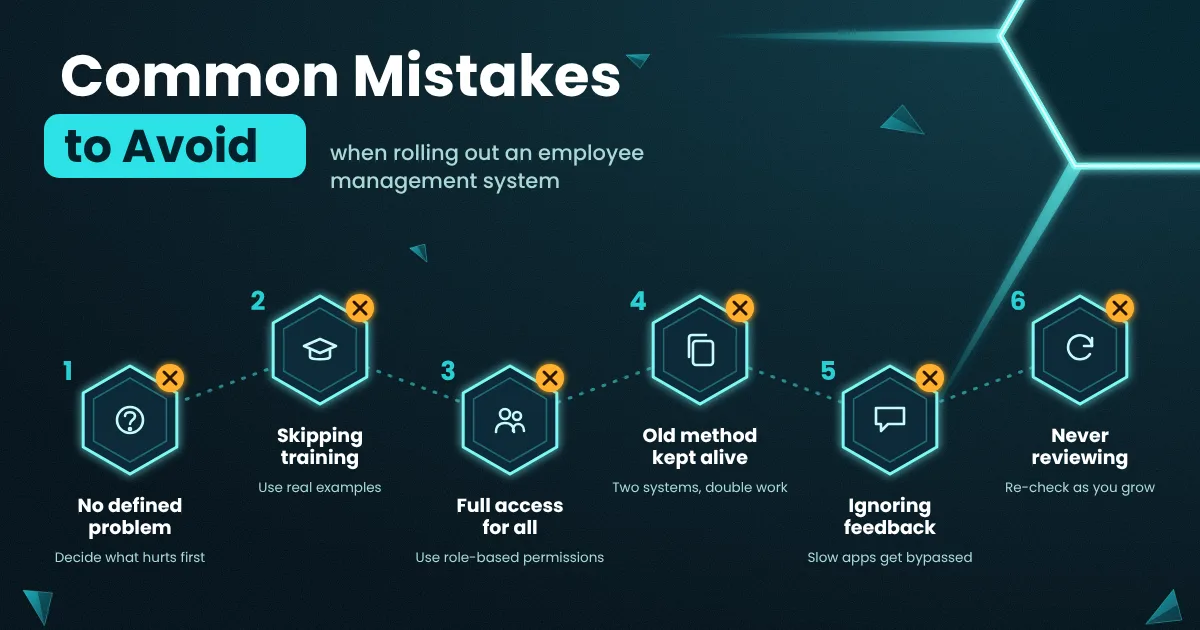
Buying before you define the problem. Decide what hurts most, such as late marks, leave disputes or slow payroll, and then look for tools.
Skipping training. A short session with real examples prevents weeks of confusion.
Giving everyone full access. Role-based permissions protect privacy and trust.
Keeping the old method alive forever. Two systems for too long means double work and no clear record.
Ignoring employee feedback. If staff find the app slow or confusing, they will find ways around it.
Never reviewing. A setup that suits ten people may need changes at fifty.
How to Measure Whether It Is Working
You do not need complex analytics. After two or three months, look at a few simple signs:
Time taken to complete month-end attendance and leave totals.
Number of disputes about late marks, leave or hours.
Share of leave requests approved within a day.
Number of record corrections needed.
Employee feedback on how easy the app is to use.
If these numbers improve, the system is doing its job. If not, check whether the problem is the rules, the training or the tool.
Frequently Asked Questions
What is an employee management system? It is software that stores employee records and manages attendance, working hours, leave and often payroll data in one place.
Why does an employee management system matter in 2026? Teams are more spread out, employees expect self-service, and owners need accurate data quickly. A cloud-based system meets all three needs better than registers and sheets.
Is an employee management system only for large companies? No. Small teams with no HR staff often gain the most, because the owner saves time and avoids disputes.
Can it work for field and remote employees? Yes. Mobile check-in and online leave requests work wherever employees are, as long as they have a phone and an internet connection.
How long does setup take? For a small team, basic setup takes a few days to two weeks. Cleaning data and running one cycle side by side take most of the time.
What should I check about data safety? Ask about role-based access, encryption, backups, an audit log and a published privacy policy, and whether you can export or delete your data.
Will employees accept it? Most do, if you explain why you are changing, train managers first and let staff see their own records. People trust a system they can see.
Final Thoughts
An employee management system in 2026 is not about watching people more closely. It is about replacing guesswork with clear, shared records so that managers can plan, employees can trust the process and owners can spend their time on the business. The businesses that benefit most are the ones that start with a clear problem, choose a tool that fits it and review the results after a month.
Start small, test with one real team and keep what works. With a careful start, the system quietly takes over the routine work and gives you a clearer picture of your team every day.