Attendance Management System A Complete Guide for Indian Businesses
An attendance management system records who worked, when they started, when they finished and how many leave days they have left, all in one place. For many Indian businesses, that job still sits in a paper register, a shared sheet or a chat group, which means late marks are argued about, leave balances are guessed and salary takes days to prepare. A modern employee attendance system replaces that routine with simple check-ins, online approvals and ready reports. This guide explains what an attendance management system is, how it works, which methods exist, what features matter, and how to start without disturbing your team.
What Is an Attendance Management System?
An attendance management system is software that tracks employee attendance, working hours, late arrivals, half days, overtime and leave. Staff mark attendance on a phone or computer, managers approve requests, and the system applies your rules and builds reports.
You will also see it called an employee attendance system, time and attendance software or attendance tracking software. The names overlap, so judge a tool by what it does for your team. A small shop may only need daily check-ins and leave. A larger business may also want shifts, reports and payroll data.
How an Attendance Management System Works
The flow is simple and almost the same in every tool.
You add your employees and their basic details.
You set your rules: working hours, grace time, weekly offs, holidays and leave types.
Staff mark attendance and apply for leave from their phones.
Managers approve or reject requests from their own screen.
The system applies your rules, updates the records and builds reports.
Salary is calculated from the same verified records, or the data is exported for payroll.
The key idea is that you enter the rules once and the system applies them to everyone in the same way. That removes most arguments about who was late or how many leave days remain.
Attendance Tracking Methods Compared
Businesses use different ways to record attendance. The table below compares the common ones.
Method | How it works | Good for | Watch out for |
|---|---|---|---|
Paper register | Employees sign in a book | Very small teams with one site | Lost pages, manual totals and easy errors |
Biometric device | Fingerprint or face scan at a machine | Fixed sites with a front desk | Device cost per site, queues and privacy rules |
Mobile app check-in | Employee marks attendance on a phone | Shifts, field staff and several branches | Needs a smartphone and internet |
Web or desktop login | Employee marks attendance from a computer | Office teams | Not suitable for staff away from a desk |
Mobile check-in with location | Phone records the place where attendance was marked | Site visits and delivery or sales teams | Needs clear consent and a fair policy |
Many businesses combine two methods, such as app check-in for most staff and a device at the main gate. Whatever you choose, all records should end up in one system so that reports stay accurate.
Key Features of a Good Attendance Management System
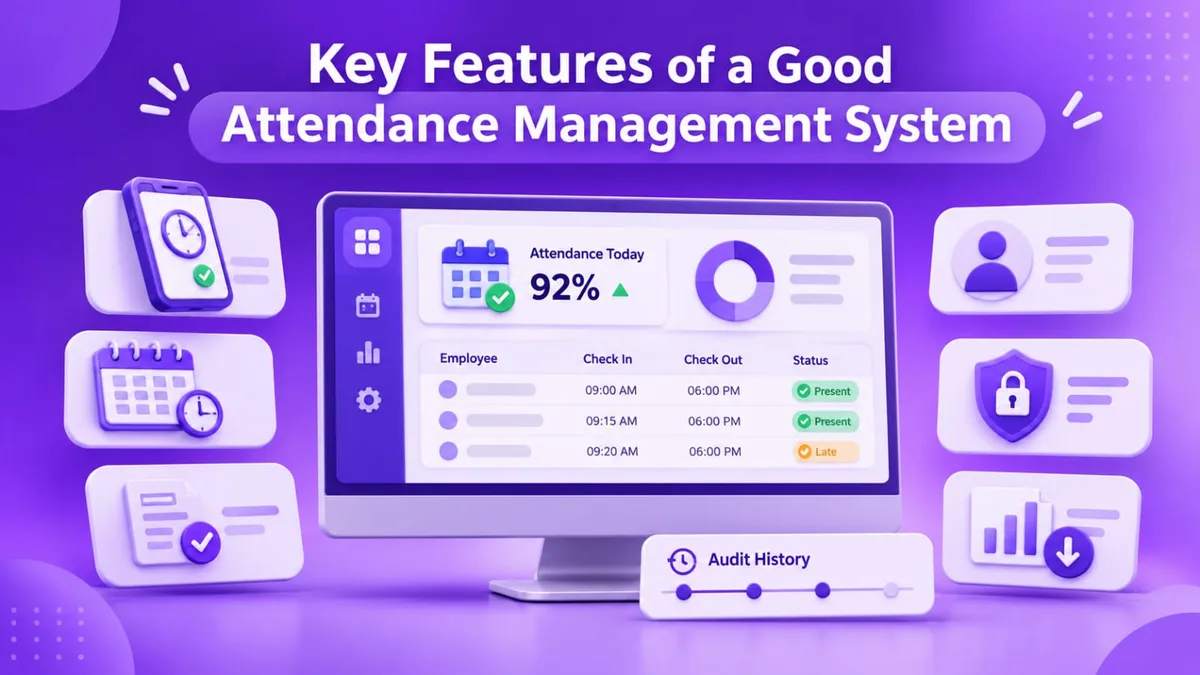
A long feature list can hide the few things you actually need. Start with this shortlist:
Mobile app that is quick and works on a slow connection.
Flexible rules for grace time, half days, overtime, week offs and your own leave types.
Leave management with online requests, approvals and visible balances.
Shift support so late marks and overtime follow each person's shift.
Employee self-service so staff can check their own attendance without asking HR.
Role-based access so a manager sees only their team.
Reports you can export for payroll, audits and reviews.
Audit trail that shows who changed a record and when.
To see how attendance, leave and employee records fit together in one tool, you can look at the Attendi features page.
Benefits of an Attendance Management System
Accurate records. Attendance is recorded when it happens, not rebuilt from memory at month end.
Less manual work. Nobody retypes attendance into a sheet or counts days by hand.
Fair and consistent rules. Grace time, half days and overtime apply to everyone in the same way.
Faster leave approvals. Requests reach the manager online with the balance attached.
Cleaner payroll data. Salary starts from verified attendance and leave, which lowers errors.
Better planning. You can see who is present, late or on leave before the day gets busy.
More trust. When employees can see their own records, there is less suspicion about deductions.
Results depend on how well you set up the rules and whether managers use the system every day.
Common Attendance Problems It Helps Solve
Late marks that cause arguments. When the grace time is written in the system, a late mark is a rule, not an opinion.
One person marking for another. This happens with registers and shared PINs. A phone-based check-in tied to each employee's own login makes it harder.
Leave disputes. Without clear balances, employees and managers remember different numbers. An online record settles the question quickly.
Month-end rush. Collecting attendance from several managers delays salary. A single system removes that step.
Missing records. Registers get lost or damaged. Cloud storage keeps records safe and searchable.
Who Needs an Attendance Management System?
Any business with staff can use one, but the gain is clearest in these situations:
Small businesses with no HR person, where the owner or office manager does everything.
Businesses with shifts, such as factories, clinics and shops, where correct hours and overtime matter.
Companies with several branches, where the owner wants one view of every location.
Schools and coaching centres, where teacher attendance and leave need tracking.
Teams with field staff, such as sales and service teams who visit client sites.
Housing societies and managed properties, where guards, housekeeping and maintenance staff need clear duty records. Platforms such as Socnivo show how a society can keep staff, visitor and complaint records in one app.
Privacy and Data Safety
An employee attendance system holds personal data: names, phone numbers, attendance patterns and sometimes location or photos. Before you choose a provider, ask:
Who can see which data, and can I limit access by role?
Is data encrypted, and where is it stored?
How often are backups taken, and how can I restore them?
Is there a log of who viewed or changed records?
Is there a clear privacy policy I can read before signing up?
A published policy is a good sign that a vendor takes the subject seriously. You can read how Attendi explains this on the Attendi privacy policy page. In India, the Digital Personal Data Protection Act, 2023 sets duties for organisations that handle personal data, and its rules are being brought into effect in stages. This is general information and not legal advice, so confirm your own duties with a qualified professional.
Good habits apply either way: tell staff in writing what you collect and why, collect only what you need, offer another way to check in if someone objects, and delete data when it is no longer needed.
How to Choose the Right System
List your problems. Write down the three or four things that hurt most, such as late marks, leave disputes or slow payroll.
Map your teams. Note where and how each group works, and which devices they use.
Check your rules. Make sure the system can follow your shifts, leave types and overtime policy.
Try the mobile app. Mark attendance, apply for leave and approve a request yourself.
Test with real data. Use a trial with a small team for a few weeks.
Compare the full cost. Most tools charge per person per month, and prices are often shown before GST, so ask for the total you will pay.
Check security and support. Ask about permissions, backups and response time.
How to Start in 30 Days
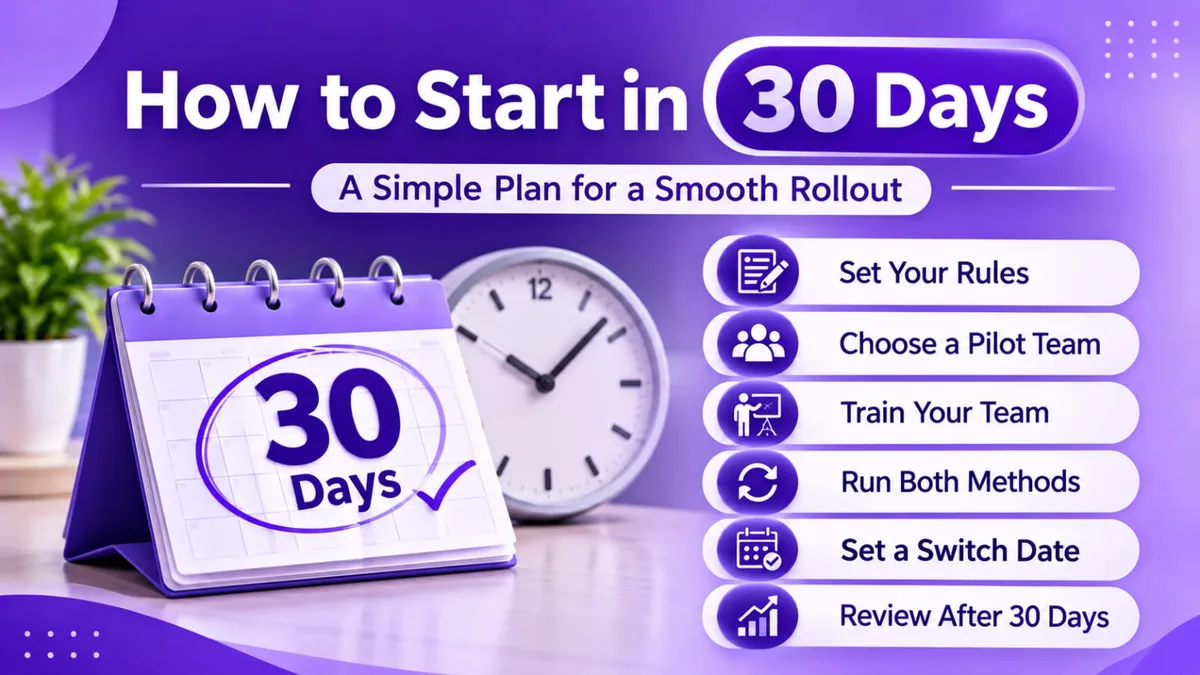
Most failed rollouts try to change everything in a week. A steadier plan works better.
Write down your rules on one page: hours, grace time, holidays and leave types.
Clean your employee data before entering it.
Pick one pilot team with a willing manager.
Train managers first, then employees, using real examples.
Run both methods for one cycle. Keep the old register beside the new system for a month and compare totals.
Set a switch date. After that date, only the system record counts.
Review after 30 days and adjust rules and permissions.
To see what the setup flow looks like before you begin, the Attendi how it works page explains it step by step.
Common Mistakes to Avoid
Buying before defining the problem. Decide what hurts most, then look for tools.
Skipping training. A short session with real examples prevents weeks of confusion.
Unwritten rules. If your leave policy is not written down, the software only records the confusion.
Giving everyone full access. Role-based permissions protect privacy and trust.
Keeping the old method alive forever. Two systems for too long mean double work and no clear record.
Never reviewing. A setup that suits ten people may need changes at fifty.
How to Measure Whether It Is Working
You do not need complex analytics. After two or three months, look at a few simple signs:
Time taken to complete month-end attendance totals.
Number of disputes about late marks, leave or hours.
Share of leave requests approved within a day.
Number of record corrections needed.
Employee feedback on how easy the app is to use.
If these numbers improve, the system is doing its job. If not, check whether the problem is the rules, the training or the tool.
Frequently Asked Questions
What is an attendance management system? It is software that records employee attendance, working hours, late marks, overtime and leave, and builds reports from that data.
What is the difference between an attendance management system and an employee attendance system? The terms are used for the same kind of tool. Some products include more features, such as shifts, payroll data or reports, so check the feature list rather than the name.
Is an attendance management system only for large companies? No. Small teams with no HR staff often gain the most, because the owner saves time and avoids disputes.
Can employees mark attendance from a phone? Most cloud-based tools have a mobile app for check-in and leave. Confirm this before you buy and check that it works on a weak connection.
Does it work for field and remote staff? Yes. Mobile check-in and online leave requests work wherever employees are, as long as they have a phone and an internet connection.
How long does setup take? For a small team, basic setup takes a few days to two weeks. Cleaning data and running one cycle side by side take most of the time.
Is employee data safe? It depends on the tool. Ask about role-based access, encryption, backups, an audit log and a published privacy policy, and whether you can export or delete your data.
Final Thoughts
An attendance management system is a simple idea: one place for attendance, leave and working hours, with your rules applied the same way every time. You do not need the biggest tool. You need one that matches your main problem and that your managers will use. Start with that problem, test with one real team and keep what works. With a careful start, the system quietly takes over the routine work and gives you accurate records every day.